July 23, 2013

Mastering the Tight Rope: Obama Nails Race in Remarks Following Zimmerman Verdict

Shout out On Being A Black Lawyer for the love they’ve shown of late. This is a piece which the published with reactions to the President’s remarks following the Zimmerman verdict. #noTavis.

Original Link: http://www.onbeingablacklawyer.com/wordpress/mastering-the-tight-rope-obama-nails-race-in-remarks-following-zimmerman-verdict

Enjoy.

Picture 53When I tuned into President Obama’s impromptu remarks today in the wake of the Zimmerman verdict, I was admittedly nervous and full of mixed emotions. For as much as I wanted the President to weigh in on the verdict, I knew that any comment would draw ire from at least one, if not multiple, constituent groups. Like many Americans, despite having some understanding of how it happened, I was still struggling to reconcile what was billed to be justice, yet just didn’t seem fair. I wondered what the President might say and whether commenting on the case would set poor precedent and invite future pressure or if saying anything at all would shift the focus away from the Martin family’s continued fight for equal justice.

Before he began, I braced myself because I was unsure which Obama would show up. The nation’s first black President has always had to operate from a precarious position on race matters and his approach has often drawn a wide range of reactions. In 2008, during his first campaign for the presidency, he delivered what many considered a groundbreaking speech on race, addressing the matter as someone of mixed heritage in the context of political pressure stemming from his ties to controversial clergyman Dr. Jerimiah Wright. That was Obama the candidate. As President, he has sometimes seemed too congenial on the topic, like when he invited black intellectual Skip Gates and a police officer to the White House for a beer and a “teachable moment” following the officer’s arrest of Gates in his own home. Even as the country digested the Zimmerman verdict from varied perspectives, friends and foes alike were quick to point to the coded language the President had used in addressing gun violence in his hometown of Chicago without ever squarely referencing black on black crime.

Still, as the President began to speak, all of those concerns disappeared. Any worries about a watered down or politicized speech immediately evaporated within Obama’s honest and heartfelt words. He gave a voice to the Black man in America, not as the President, but as a black man in America. The powerful irony of what he had to say was its context: a black man, the President of the United States of America, was identifying himself with a segment of the population that, despite achieving the highest office in the land, cannot escape the feeling of being marginalized to a place of second class citizenship. He took his initial remarks on the case, about having a son who would look like Trayvon Martin, and stepped even further, remarking that 35 yrs. ago, he himself might have been Trayvon. I am usually loathe to speak in hyperbole, but I believe that today’s remarks may be the highlight of the Obama administration as it relates to black America. Osama Bin Laden may have been the most wanted man in the world, but he wasn’t keeping black men unemployed. The Affordable Health Care Act is great, but hasn’t stopped folks from catching hell. This meant something. It was HUGE. One of us, the President of the United States of America, was speaking to America for all of us. More than that, he was speaking through the lens of his own personal experience, and finally using the unique advantage he holds over his 43 predecessors, speaking from a place of empathy while they could only have hoped to speak from a place of sympathy.
In today’s speech, the President displayed a mastery of the tightrope that is addressing race in 2013 America while still being the President of all Americans. He did this by not ignoring the issue or being an apologist, but by speaking directly to it while still remaining an optimist and highlighting progress. One thing that cannot be lost in terms of significance of the President’s remarks is the incredible amount of courage that he displayed. The President knows the backlash he will receive from those who prefer to act as if we are in a post-racial society. He knows the GOP, FOX News and others will accuse him of race-baiting and divisive tactics.
He knows that even some within his own community will criticize him for taking too long or not saying enough. He didn’t HAVE to say anything.
But, he did.
He was sincere, he was thoughtful, and he was candid. But, more than that, he was finally the President that black America has been waiting on in a moment where, perhaps, we needed him most.
Charles F. Coleman Jr. is a former King’s County (Brooklyn, NY) Assistant District Attorney and a federal civil rights trial attorney.  Follow him on Twitter @CFColemanJr


July 23, 2013

Pause & Consider: Switching Gears to Voting Rights, Thoughts on Standing Our Ground

by: The Civil Writer

Quick Thoughts on Next Steps after Shelby v. Holder

I wanted to switch gears for a moment as I have been giving thought to some of the comments posted by Hillary Clinton from her visit with the Deltas during their centennial. Specifically turning to the issue of voting rights after the SCOTUS’ recent decision in the Holder case.

While Section 4 (the pre-approval) portion of the Voting Rights Act may be done away with (possibly forever), we must figure out ways around what was lost to ensure that hundreds of thousands of citizens (often citizens of color) will not become disenfranchised. One interesting approach is actually not trying to fight the difficult battle on the federal level, rather for the residents of those states affected (Miss., Ala., Tx., Ark., etc.), to encourage a high level of civic involvement and engagement on the state and local level. Putting pressure on state legislators to enact or renew local laws which protect voting rights may prove a viable strategy to “hold the line” until we have a window to try and pressure a Congress of a different make up to re-enact new provisions of the Voting Rights Act similar to what was lost.

Obviously this presents somewhat of a problem because that a significant amount of being able to apply that pressure belies the notion that folks will actually be able to vote. This is why it is something that CANNOT WAIT until another national election. That will be too late. The stakes will be too high and by then, the rules will have already changed. Now is the time for those in the jurisdictions most vulnerable, to bear down on their local leaders and state legislatures to make sure that there are local laws which keep their voting rights from being abridged. Keep in mind this has already become an issue in Texas and I suspect that the other states that were subject to pre-approval under Section 4 and 5 of the Voting Rights Act and are no longer will not be far behind before trying to make changes that could adversely impact citizens right to vote.

This is important stuff. These are important conversations.

“A lawyer is either a social engineer or a parasite on society.”
–Charles Hamilton Houston

‪#‎staytuned‬

On Standing Our Ground 

Encouraging vigilante-ism through bad self-defense laws is only part of the problem. Stand your ground on the uncompromising choice to make safer communities. Stand your ground and be undeterred that we will not let injustice carry the day. Dig in your heels and stand your ground in deciding that we are through allowing entire populations to feel alienated as second class citizens. 

We, too, will stand our ground. And we do so not for just protest. We stand our ground determined to achieve progress.
July 22, 2013

Media Alert–HOT 97, Fox 5 News, Cafe Mocha (WBLS)

Look ma, we on t.v.!

So the Civil Writer, Attorney Charles F. Coleman Jr. has been doing quite a bit of press lately. We have already covered the NAACP rally with Solange Knowles but the homie Lisa Evers has been amazing in helping provide exposure to one of the legal scene’s up and coming legal analysts.

The Zimmerman trial and aftermath of it’s coverage has also given rise to new voices such as former Brooklyn prosecutor Charles F. Coleman, Jr. who just this week wrote a piece for Ebony magazine’s website entitled, “JUSTICE FOR TRAYVON: What Went Wrong?,” in which he dissected the not guilty verdict. “

I mean, they said it. Not me. Shout out On Being A Black Lawyer and PR Diva Aprill O. Turner for looking out. 

Here’s a quick summary of a few recent going ons.

7.14.13–Hot 97 Street Soldiers Program with Lisa Evers discussing the immediate aftermath of the Zimmerman Verdict. This was a great panel with Faith Jenkins, my man Julian Lewis from Howard #HUUUUUU , and a great community organizer in Al-Tariq.

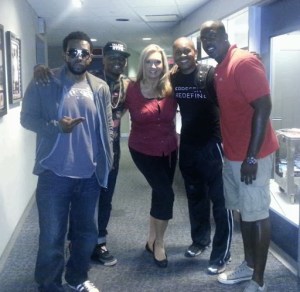
7.14.2013 Street Soldiers Panel l to r: Faith Jenkins, Charles F. Coleman Jr., Lisa Evers, Al-Tariq, Julian Lewis 

CLICK HERE to listen to the Street Soldiers Podcast in its entirety.

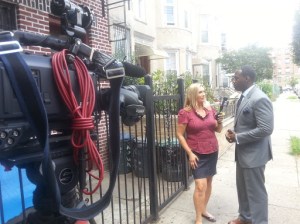
After that, it was off to FOX5 News with Lisa Evers to offer television comment on the Zimmerman case.
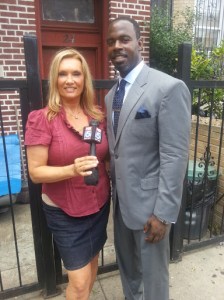
Charles F. Coleman Jr and Fox5 News reporter Lisa Evers
CLICK HERE to watch an excerpt from the story (and please “Like” the page while you’re at it!). My apologies on the poor video quality.

Then the following weekend on 7.21.13, Civil Rights Attorney Charles Coleman Jr. was featured on the syndicated radio show Cafe Mocha in NYC (WBLS), Wash., DC (WHUR), Greensboro, NC, Chicago, IL (SOUL 103), Columbus, GA (K97), Chattanooga, TN, Jackson, TN, and Minneapolis, MN (BMA.com)
Shout out to super producer Chris Mercado for helping put the Civil Writer on the radio! Stay tuned for the upload of that broadcast, coming soon.
Turns out, things went so well on Street Soldiers that Lisa Evers had us BACK on the show on 7.21.13. This was an AMAZING panel featuring legendary underground hip hop artist Pharoe Monche, famed writer and activist Kevin Powell, Civil Rights Attorney Charles F. Coleman Jr. and up and coming Rahim “Precise”. The broadcast discussed next steps in the wake of the Zimmerman trial and also had a call in from Styles P and Raheem DeVaughn.
7.21.13 Street Soldiers panel l to r: Pharoe Monche, Precise, Lisa Evers, Kevin Powell, Charles F. Coleman Jr.
CLICK HERE to listen to the entire broadcast. Simply amazing.
#staytuned

July 22, 2013

Pause & Consider: Race, Jurors, and Perspective

by: The Civil Writer

One of the things I have found most interesting about the Zimmerman trial, that I haven’t had an opportunity to fully explore in conversation is how the issue of identity politics played into the jury and jury selection.

The prosecution banked on the fact that the identity of mothers on the jury would prevail over all else and carry the sympathy factor. While it is less clear which factor the defense felt would trump (race, or gun ownership, for example), they clearly weren’t as concerned about the fact that there would be mothers on the jury–or, they gambled that the mother-piece could be just as advantageous to their client if they could show Zimmerman to have acted out of fear for his life. Whatever the point(s) they used, the defense made a better calculation in this vein.

The mysterious Juror B37

I do not think the prosecution gave the proper amount of credence to race in terms of identity politics. There may have been an underestimating of whether white jurors might feel some commonality with Zimmerman because of his race or be susceptible to buying into the aggressive demonization of Trayvon Martin by the defense. Part of how this can so easily occur is for folks who do not regularly deal with race as part of their every day existence, the blinders that they have on cannot easily be lifted.

They missed this because they would not be called to think about this, normally, in any complex, critical or multi-faceted manner. (SN: How you allow a juror to sit when she refers to a victim as a “boy of color” escapes me but, I digress.). It isn’t as simple as making a determination about whether someone is a racist–the racial element of this trial was much more complicated than that. It extends to being able to understand and rank how important race is when you are discussing identity politics and how they would impact this particular situation.

Suffice to say, when it is a matter of life and death, freedom v. jail, innocence v. guilt, race might not trump all…but, it’s pretty damn high.

‪#‎staytuned‬

July 22, 2013

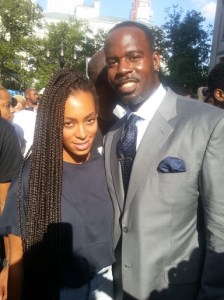
Solange Knowles and Attorney Charles F. Coleman Jr. head NAACP protest in Brooklyn, NY

Rolling Out magazine continuing to offer 360-degree coverage of all things ‪#‎Justice4Trayvon‬ in the wake of the verdict.* They covered the rally with the Brooklyn branch of the NAACP and Solange Knowles (didn’t know the civil writer was a headliner with a Knowles).

Shout out to media committed to advancing the struggle of social justice. Shout out @M320_Consulting for an amazing job with pitch and placement. Said it before…they are PR BEASTS.

To get involved here in Brooklyn with NAACP, text “Brooklyn” to 62227. (Standard messaging rates apply. I’ve always wanted to say that.)

Solange Knowles and Charles F. Coleman Jr. head NAACP Trayvon Martin protest in Brooklyn

7:26 AM EDT
7/17/2013 by Jana Hicks
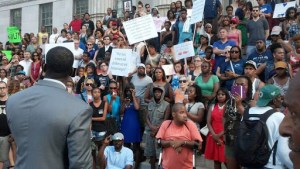
Knowles addresses the crowd while Coleman looks on
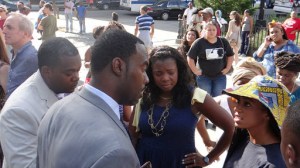
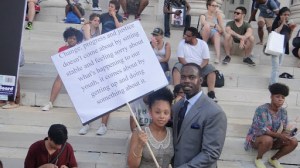
On Sunday, July 14, the Brooklyn Branch of the NAACP collaborated with celebrity Solange Knowles to host a rally on the steps of Brooklyn Borough Hall calling for the United States Department of Justice to file Federal civil rights charges against George Zimmerman in the wake of his acquittal in the criminal case.
Dressed unassumingly and standing with a poise that conveyed extreme sincerity, Knowles delivered a heartfelt address to the hundreds of supporters in attendance. She spoke about not being a politician, but someone who believed that it was time for action and for change, calling for justice for the 17-yr. old Martin from Sanford, Fl. who was killed when George Zimmerman shot him in February of 2012.
Knowles held a plaque between her hands, which quoted the words of Malcolm X: ‘I’m for truth, no matter who tells it. I’m for justice, no matter who it’s for or against.’
After her remarks, Charles F. Coleman Jr., civil rights attorney and chair of the Brooklyn NAACP’s criminal justice committee delivered words to the crowd. “This is not simply about Trayvon. The injustice in Sanford, Florida is as much about stand your ground as it is about stop and frisk policies here in New York City. We must take a stand. The time is now.”
Coleman addresses the crowd
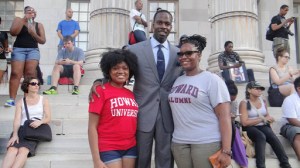
Howard University alumni and Coleman
Members of the Brooklyn branch were on hand, coordinating the signing of the petition, which urged the Justice Department to file civil rights charges against Zimmerman, who was found, not guilty late Saturday evening.
“The Justice Department has said they would review the case,” Coleman remarked. “We will not rest until the charges have actually been filed.”
Coleman and Knowles work through details
Several community leaders and elected officials attended including New York City Councilwoman Leticia James and City Council speaker Christine Quinn. Victim rights advocate Ken Thompson urged the crowd to remain vigilant in advocating for justice. “Trayvon has a long legacy in this country which dates back to Emmitt Till and extends to include Abner Louima and Sean Bell.”

Coleman with a young protester. 

Yesterday the NAACP placed the same petition online calling for action from United States Attorney General Eric Holder. By evening, the number of signatures had reached 100,000.

To stay abreast of all happenings with the Brooklyn branch of the NAACP, text “Brooklyn” to 26227.

July 22, 2013

Trial Attorney Charles F. Coleman Jr. Gives Reasons for Zimmerman Accquittal

So the civil writer himself was featured in Rolling Out after trying to provide a plain speak explanation to the Zimmerman verdict.* The original article can be found here but is also cut and pasted below. Big shout to @M320_consulting for the placement although something must be done to permanently remove the “husky” photos off the internet!

Trial attorney Charles F. Coleman Jr. gives reasons for George Zimmerman acquittal

10:00 AM EDT
7/16/2013 by Terry Shropshire

charles coleman2

As a seasoned trial attorney, Charles Coleman Jr. was not surprised by the not guilty verdict following the George Zimmerman trial even though he shared in many citizens’ disappointment.
“The verdict is consistent with (Florida) law, but it’s not consistent with justice,” Coleman said. “And that’s the difficult thing for people to reconcile. That’s a very hard pill to swallow.”
So hard in fact that demonstrations and protests have broken out in major cities across the country in the aftermath of Zimmerman’s acquittal of second-degree murder in the killing Trayvon Martin in Sanford, Fla.
A veteran practitioner of juris prudence, Coleman spent five years as an assistant district attorney in New York City before becoming a federal trial attorney in the civil rights arena, specializing in equal employment opportunity law. Coleman’s cases have been featured on the Huffington PostMSNBC.comLaw360.com and the National Law Journal.
Cultural morays, Coleman attests, as well as other important factors played into the way the law was administered in this case.
In Florida, unlike in his home state of New York, “it’s very much acceptable to shoot first and ask your questions later. That’s the culture. That’s why it’s not surprising that three of the jurors were gun holders. That’s what the culture is,” Coleman said. “It’s not necessarily foreign to them. I think that the law, combined with the culture, combined with a couple of other things such as race and a poor case put on by the prosecution, led to what the eventual outcome was.”
Unlike many ordinary laymen and women, who think that the state botched key witnesses — most notably Martin’s friend Rachel Jeantel — Coleman believes a much bigger prosecutorial error helped decide the outcome.
“Rachel Jeantel did fine. I think the bigger miscue [is] the prosecution let the narrative get away from them and they did not do a good job of controlling the narrative. The defense was able to take ahold of the narrative and they never gave it back and the prosecution never went and reclaimed it.
“[The state] tried to reclaim the narrative during the summation, and I think they did a very good job on the summation and the rebuttal. But, by that time, it was too little too late,” Coleman continues. “They had allowed the entire course of the trial to be about too many little details that had detracted from the bottom line. And the bottom line was: you had a 17-year-old, who was unarmed, who had done nothing wrong, who was dead. That was undisputed. You had a person in that room that was the shooter. That was undisputed. George Zimmerman was the killer. That was undisputed. The verdict is that a young man is dead and no one is held responsible for it. They lost the case when they lost the narrative. They didn’t sell it right. They didn’t make that clear. They had that part of their strategy but they assumed that’s what the jury would surmise that.”
Coleman believes it is “highly unlikely” that the U.S. Department of Justice will bring forth any other charges against Zimmerman. The NAACP and other groups pressed Attorney General Eric Holder to investigate the former neighborhood watchman.
“Some see Trayvon Martin as the modern-day Emmett Till, and that may be true. But the federal anti-hate crime statutes as they are written do not fit the facts in the Zimmerman case,” Coleman said.
Coleman added that the FBI, a bureau within the Department of Justice, had already interviewed Zimmerman and 30 people last year to determine if Zimmerman was guilty of a hate crime in following, confronting and shooting Martin. The answer was “no.”
*originally published on 7/16 at rollingOut.com
July 22, 2013

JUSTICE FOR TRAYVON: What Went Wrong?

JUSTICE FOR TRAYVON: What went wrong? 
An brief analysis of the trial of George Zimmerman from the perspective of a former Brooklyn, NY prosecutor.

by: Charles F. Coleman Jr.*

I never met Trayvon Martin. I never had an opportunity to see him smile or hear him laugh. I became familiar with his wonderful mother, a woman of incredible strength, through the most unfortunate of circumstances. Still, I never had the chance to actually meet Trayvon himself.

When I heard the verdict on Saturday, like many, I was confused and disappointed. The duality of being a black man who is also former prosecutor  was too much to bear and too difficult to reconcile in that moment. After stepping back and looking at the trial objectively, and the case in its entirety, I have to concede that the verdict–while unjust–is consistent with the law.

The first thing that must be understood is the difficult nature of the prosecution’s case. There are only two people who were present on that February night in 2012. Just two eye witnesses who actually know what happened. One is dead. The other is protected by his Constitutional right against self-incrimination. That means it was up to the State of Florida to tell Trayvon’s story. They were without the benefit of Trayvon himself, but were further handicapped by not having anyone else who would be able to deliver a first hand account of that night’s fateful events.
`
From as early as the indictment, months before the actual trial, the prosecution struggled to stay in front of a case that was spiraling out of control on a rapidly growing stage. The inaction by Sanford police regarding Mr. ZImmerman’s arrest drew Trayvon’s death further into the national spotlight before the State’s attorneys office had concluded its investigation. The court of opinion was at the wheel, steering the ship and, in the process, giving the defense team extra time and useful insight to develop a strategy that ultimately proved effective. When the prosecution did file its indictment shortly after Mr. Zimmerman’s arrest, the indictment seemed rushed in the charges the State brought against him. In hindsight, it is even more obvious that the prosecution had not thought critically about its theory of the case. One reason for a hasty indictment may have been the state’s need to create the appearance of swift justice after such a long delay before Mr. Zimmerman’s arrest. The pressure had swelled as the case became more a part of a national dialogue and our consciousnesses all began shining a collective spotlight on small Sanford, Florida. Even President Obama lent comment on the situation.

What George Zimmerman Can Do Now
George Zimmerman following the not guilty verdict at his trial in Sanford, FL. Zimmerman was accused of murdering 17-yr old Trayvon Martin.

The result of all of this was that the prosecution lost control of the narrative of the case and never got it back. Rather than aggressively hammering home the bottom line and seeking a fair and just verdict which was consistent with common sense, the State was baited into a game of debate on marginally important details. This played directly into the defense’s strategy, and allowed too much room for reasonable doubt. The State spent its case in chief on its heels, spending as much time laying the foundation for its own case as they did trying to anticipate and counter the arguments they expected the defense to make. Meanwhile, the defense knew that the prosecution’s distraction with smaller issues was enough to give their client a fighting chance. Therefore, they goaded the State into following them deeper down that trail. The prosecution then happily obliged, and got further away from the bottom line which mattered most.


This perpetual game of “catch up” played within the context of the defense team’s narrative was a fatal flaw because the State had allowed everyone from Trayvon Martn to Rachel Jeantal to be placed on trial. Everyone except for Mr. Zimmmerman. By the time the defense had competed its case, and before closing statements, a trial which was once about a young black man’s right not to be profiled, targeted, and murdered for doing absolutely nothing, had suddenly morphed into seemingly endless small details with no one to really explain why they were so important in the context of the big picture. While the prosecution delivered an outstanding summation and rebuttal that attempted to bring back the narrative, it was simply too far gone by that time. Too little too late.

Despite the fact that the verdict in this case may be consistent with the law, the outcome hardly seems consistent with justice. A young, innocent, unarmed black boy was killed. And this verdict says that it’s no ones’s fault.

I never met Trayvon Martin. And, because of George Zimmerman, I never will.

*originally published on EBONY.com, July 15, 2013

Charles F. Coleman Jr. is a former Brooklyn, NY prosecutor and current federal trial attorney specializing in civil rights.

He can be reached at civilwriter@gmail.com and on Twitter @CFColemanJr.